Picture this: A customer clicks on your website. They’re ready to buy or sign up. But instead of finding what they need, they’re stuck on a slow-loading page, squinting at messy fonts, and clicking through confusing menus. Frustrated, they close the tab. And your competitor just gained a customer.
This isn’t just a scenario. It happens every day. Studies show nearly 40% of people leave a site if it takes more than 3 seconds to load. And once that trust is broken, they rarely return.
Bad website design doesn’t just look unprofessional. It actively costs your business revenue, leads, and long-term customers. In this blog, we’ll break down exactly how poor design pushes people away and how quality website design services help you avoid those pitfalls.
First Impressions Decide Everything
We’ve all heard the saying, “You never get a second chance to make a first impression.” Nowhere is that truer than online.
Customers judge your brand in a few seconds. That first impression can either pull them in or drive them out.
- Outdated designs signal neglect.
- Stock photos and clunky layouts scream “cheap.”
- Websites that aren’t mobile-ready look irrelevant in a world where 60%+ of traffic is mobile.
On the other hand, clean layouts, thoughtful branding, and mobile-friendly design immediately build trust. They say, “This business is professional. This business cares.”
When customers feel that way, they stay longer, explore deeper, and are far more likely to engage. First impressions online aren’t just about style – they directly shape whether someone becomes a customer or a lost opportunity.
UX Mistakes That Push Customers Away

Most people don’t leave a website because the product is bad. They leave because the experience of using the site is frustrating. Poor user experience (UX) is one of the fastest ways to lose potential customers.
Slow load times: Every second of delay increases the chance of someone bouncing. A few extra seconds can mean dozens of lost leads every day.
Confusing navigation: If visitors can’t figure out where to click, they won’t waste time. They’ll move on to a competitor who makes it easy.
Visual clutter: Pop-ups, autoplay videos, or a crowded layout overwhelm visitors instead of guiding them.
Mobile neglect: More than half of all website traffic comes from phones. A site that doesn’t adapt to smaller screens feels broken to mobile users.
Ignoring accessibility: If your site isn’t usable by people with disabilities, you’re not only excluding a huge audience but also risking compliance issues.
Think of UX like the layout of a store. If aisles are blocked, signs are missing, and the checkout line is hidden, customers will leave no matter how good the products are. The same logic applies online: if visitors can’t find what they need quickly and easily, they won’t stick around.
Bad UX isn’t always obvious to business owners because they’re too close to their own site. But for a fresh visitor, it’s often the first thing they notice. Ironically, it’s also the reason they leave.
Design That Destroys Conversions
Even if visitors stay on your site, bad design can still kill conversions. A conversion could mean a sale, a sign-up, or even just filling out a contact form. When the design gets in the way, customers hesitate. Hesitation = lost conversion. Let me paint a picture:
A visitor lands on your site. They like what they see at first – the branding feels modern, the product sounds useful, and they’re curious to learn more. They scroll, ready to take the next step.
But then, things start to fall apart.
The “Sign Up” button is hidden below a wall of text. The font is so small on mobile that they have to zoom in just to read the details. An autoplay video blares in the background, distracting them from the offer. And when they miraculously reach the checkout form, there are no reviews or trust badges to reassure them it’s safe to buy.
By this point, their excitement is gone. Instead of feeling confident, they feel uncertain. So they close the tab and look elsewhere.
Bad design creates friction that pushes potential users further from the finish line.
The Long-Term Consequences of Bad Website Design
A poorly designed website doesn’t just look unprofessional – it chips away at your business in ways that aren’t always visible at first. Here’s how the damage shows up over time:
Lost Revenue from Missed Conversions
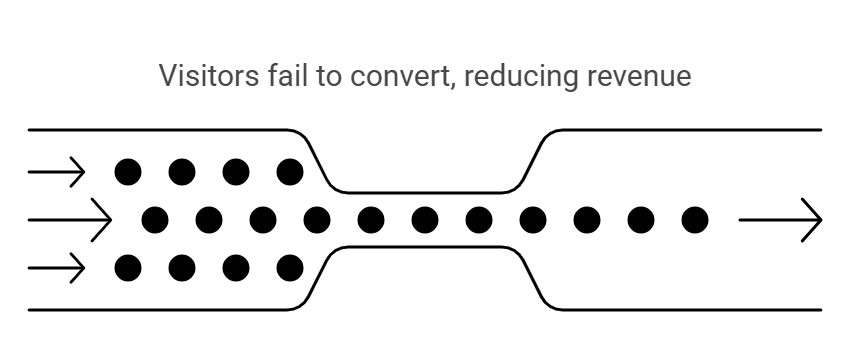
Every time a visitor leaves before buying or signing up, you lose potential income. Even a 1–2% drop in conversion rates can mean thousands of dollars lost each year, depending on your traffic.
Rising Customer Acquisition Costs
When your site doesn’t convert well, you have to spend more on ads, SEO, and promotions just to achieve the same results. In other words, a bad website makes every new customer more expensive to acquire.
Lower Search Engine Rankings
Search engines reward sites that are fast, mobile-friendly, and user-friendly. Poorly designed sites are harder to navigate, slower to load, and less likely to rank well, meaning fewer people discover your business organically.
Damage to Brand Reputation
Your website is often the first interaction a customer has with your brand. If it feels outdated, sloppy, or untrustworthy, people assume your business operates the same way. That negative perception spreads quickly.
What Good Website Design Looks Like
A customer clicks on your site. It loads quickly, even on their phone. The navigation is clear, the layout uncluttered. Instead of hunting for information, everything they need is right in front of them. A bold but simple call-to-action invites them to “Get Started.” Testimonials and reviews reassure them they’re making the right choice.
Notice what’s happening here. The friction points we covered earlier – slow speeds, confusing navigation, weak CTAs, lack of trust signals – are gone.
Good design has a few consistent qualities:
- Clarity: Pages are easy to read and flows are simple to follow.
- Speed: Sites load quickly and respond smoothly on all devices.
- Trust: Social proof, security badges, and consistent branding make visitors feel safe.
- Accessibility: Every user, including those with disabilities, can interact with the site without barriers.
- Conversion focus: CTAs are visible, logical, and persuasive without being pushy.
How to Fix Bad Website Design
The good news is, fixing bad design doesn’t mean tearing everything down and starting from scratch. It means taking a structured approach to identify weak spots and improve them step by step.
Here’s how businesses usually tackle it:
- Audit what you have
Look at your site’s performance: loading speed, mobile responsiveness, navigation flow, and accessibility. Even a quick review often reveals where customers get frustrated. - Listen to real users
Analytics tell part of the story, but watching real customers interact with your site through usability testing or surveys uncovers the hidden pain points you might miss. - Simplify the experience
Cut the clutter, highlight key calls-to-action, and make sure the path from “interest” to “purchase” is smooth and obvious. - Prototype before you commit
Instead of guessing, test design changes through wireframes or interactive prototypes. This allows you to validate decisions before investing in development.
This is the kind of process we follow at Heromint – combining research, strategy, and design to help businesses create websites and apps that work beautifully for their customers. It’s not about flashy visuals alone; it’s about building digital experiences that keep visitors engaged and confident.
When you take design seriously, your website stops being a cost center and starts becoming one of your strongest business assets.